

Locational Value and Urban Role
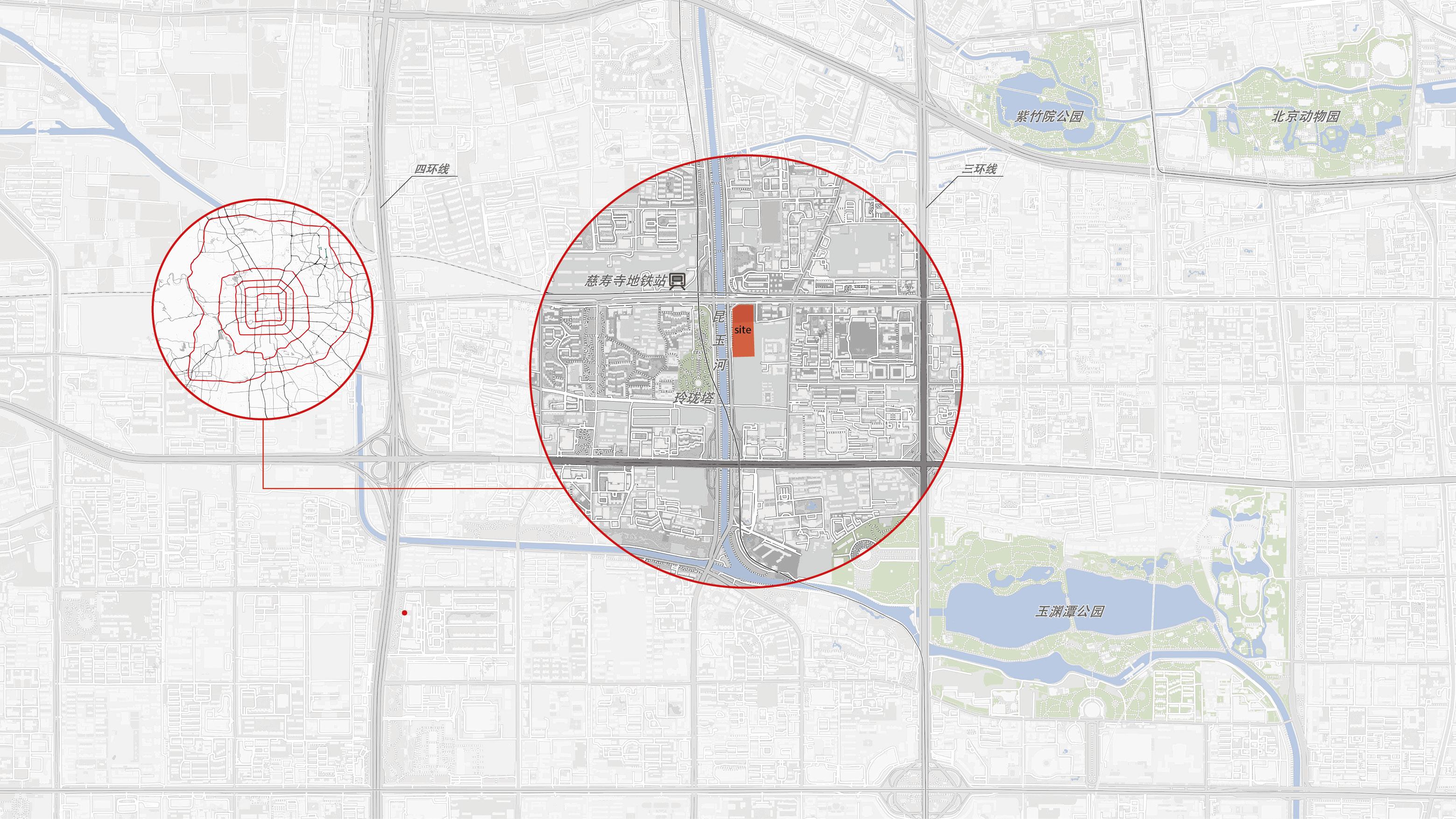
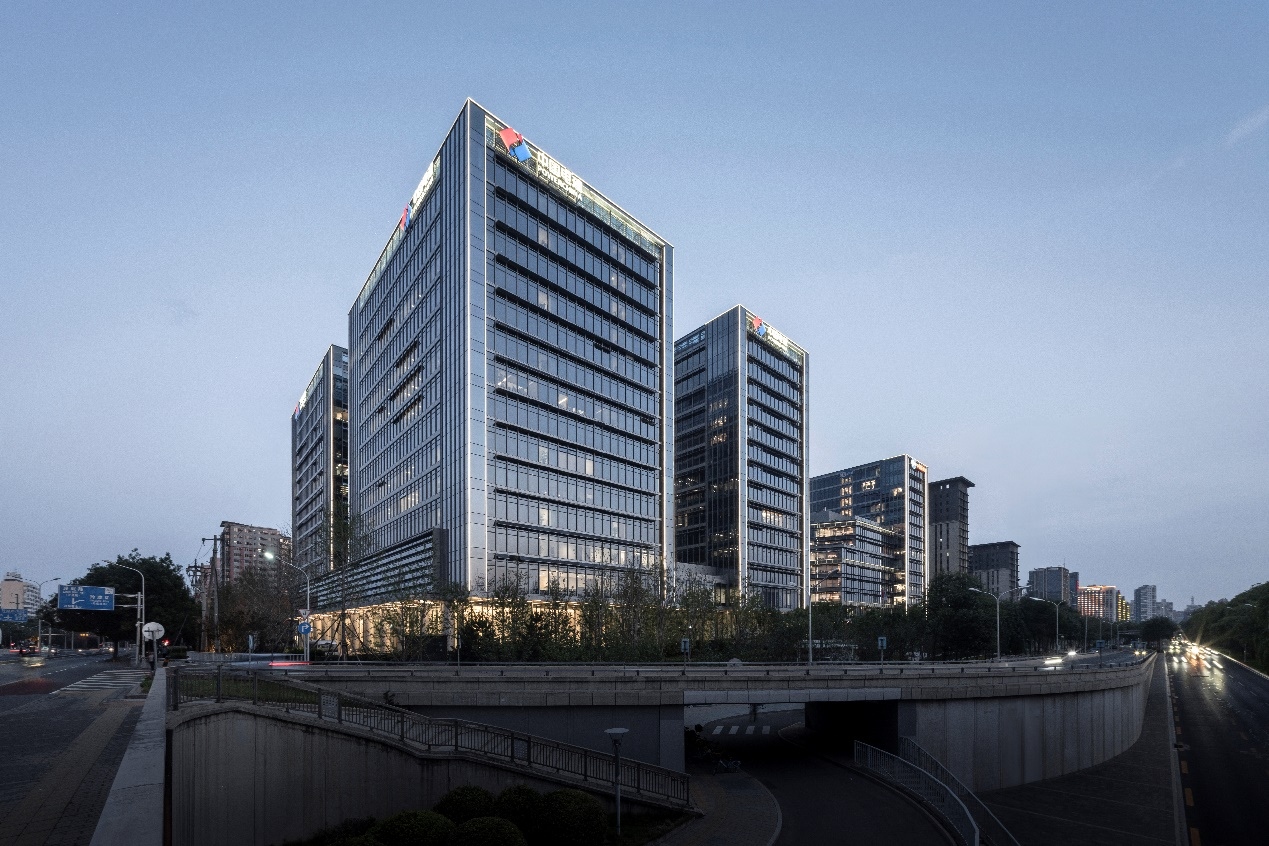
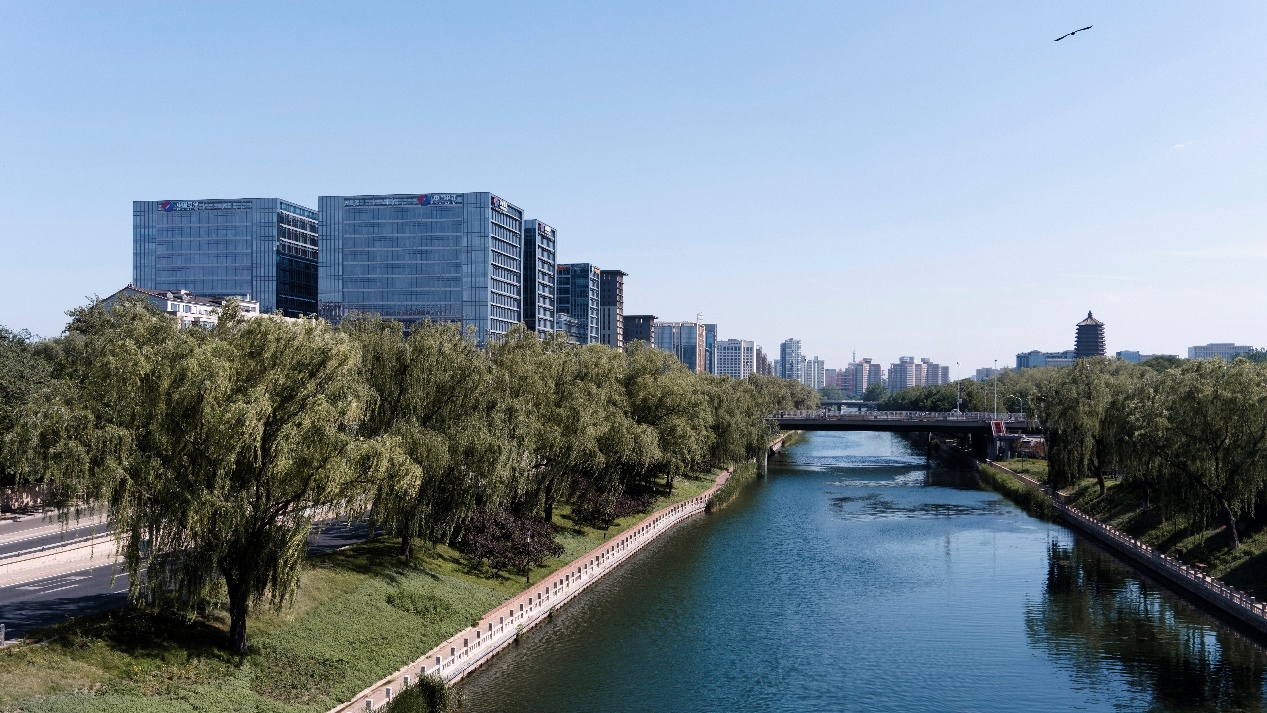
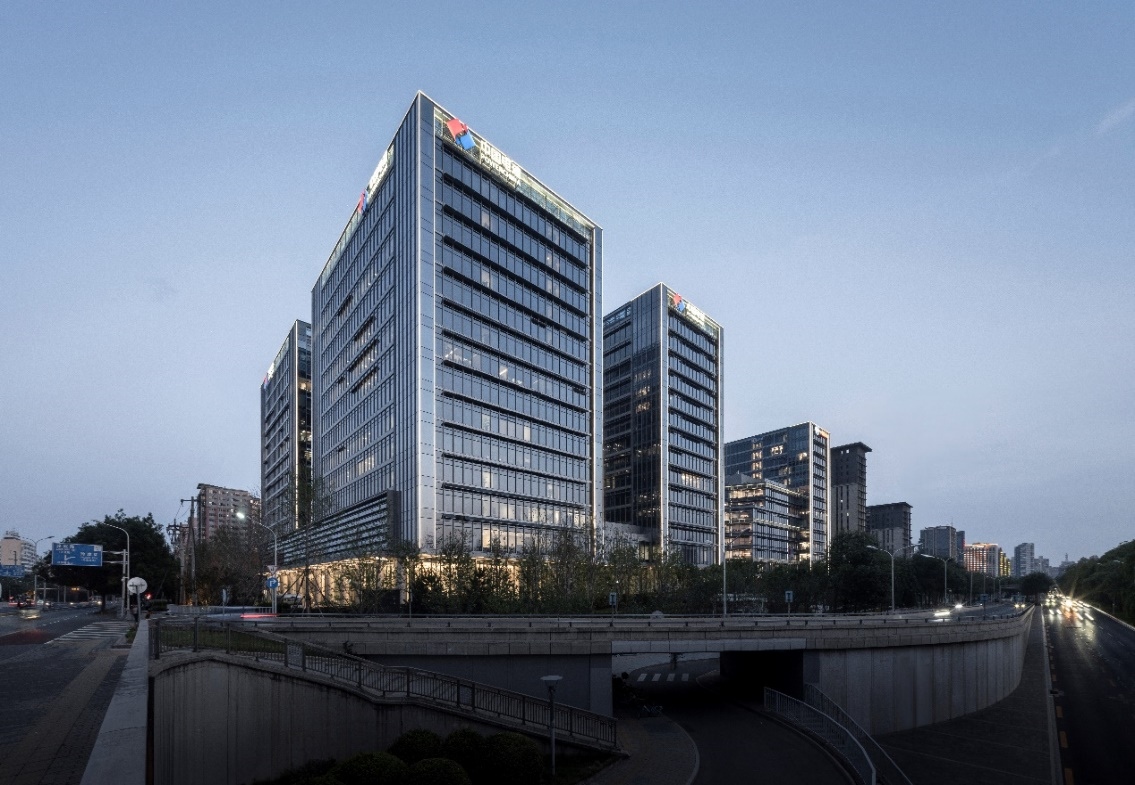
As a rare revitalization-driven urban regeneration model within Beijing's Fourth Ring Road, the project is strategically located at Linglong Lane in Haidian District, a key "urban ligament" in the city's topological network. With a total development area of 209,205 square meters (129,400 square meters above ground and 79,146 square meters underground), it assumes a dual spatial role: both a "spatial converter" linking the central urban area with the CBD functional corridor and a "morphological catalyst" reconstructing the east-west urban development axis. This spatial mission requires the building cluster to not only showcase the iconic appeal of a world-class corporate headquarters but also address the spatial efficiency challenge of high-density urban development.
Planning Strategy: Multi-Row Bar-type Layout and Ecological Infiltration
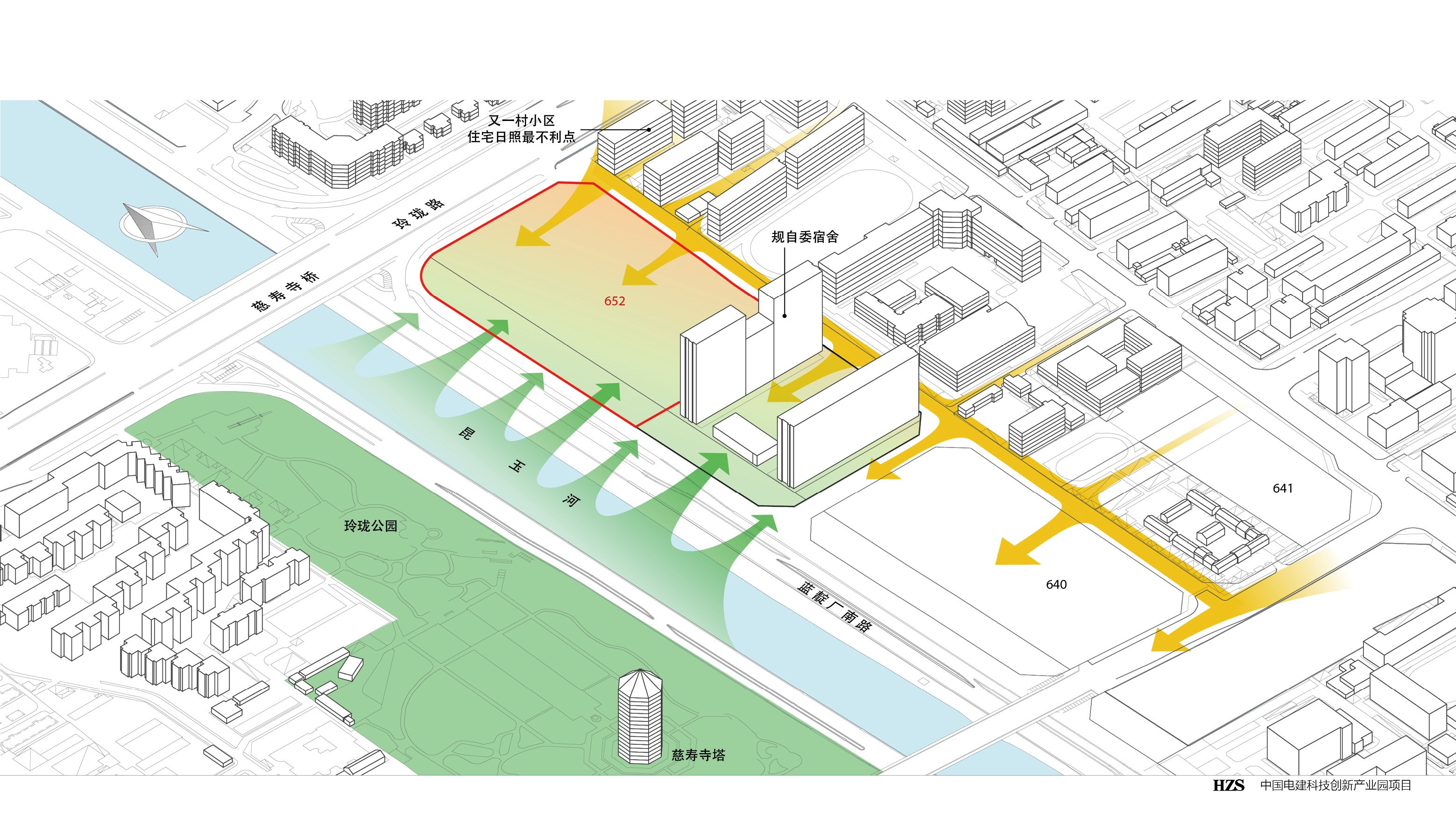
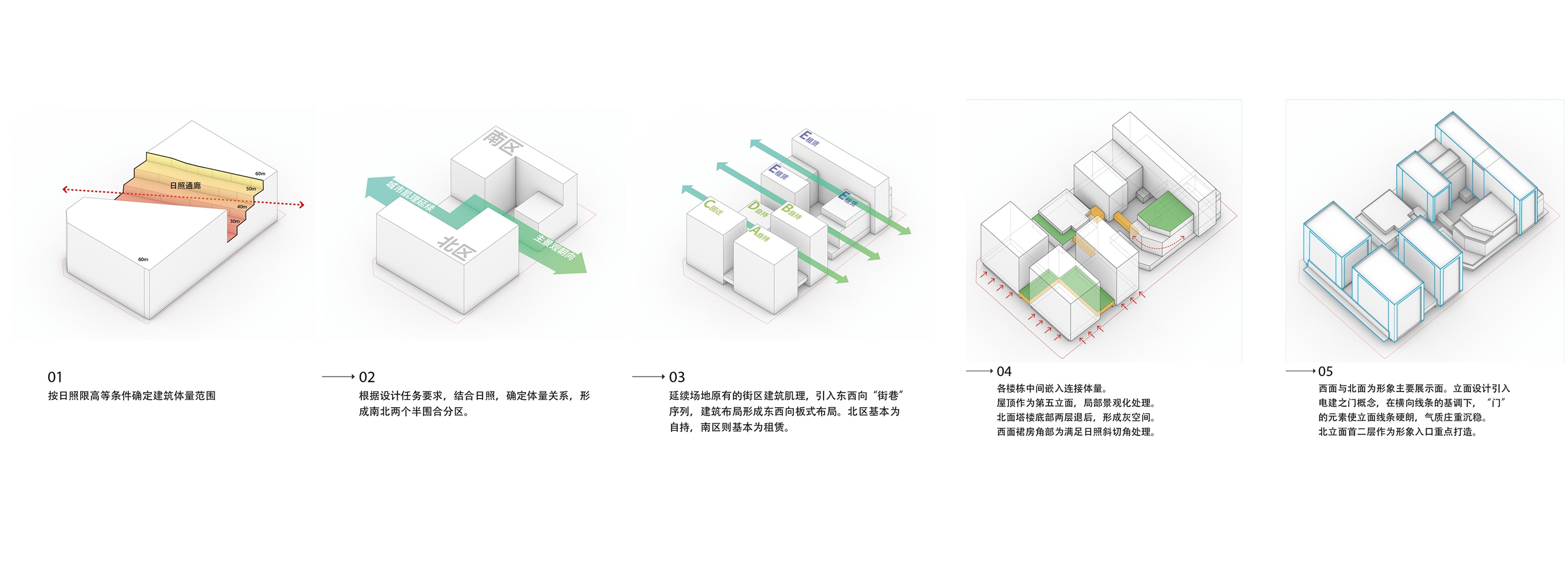
· Urban Texture Stitching: The park adopts a multi-row slab layout in planning, enabling seamless integration with the urban texture while realizing mutual infiltration and integration with surrounding historical and cultural landscapes as well as natural ecological environments. This design endows public spaces with excellent openness and order, avoids the sense of oppression exerted by traditional towers on the urban interface, and forms a harmonious transition with the scale of neighboring buildings.
· Visual Corridor System: Three east-west corridors introduce the landscape of Kunyu River on the west side into the park, forming a gradient infiltration of "Ecology - Architecture - City", optimizing the microclimate and enhancing spatial mobility.
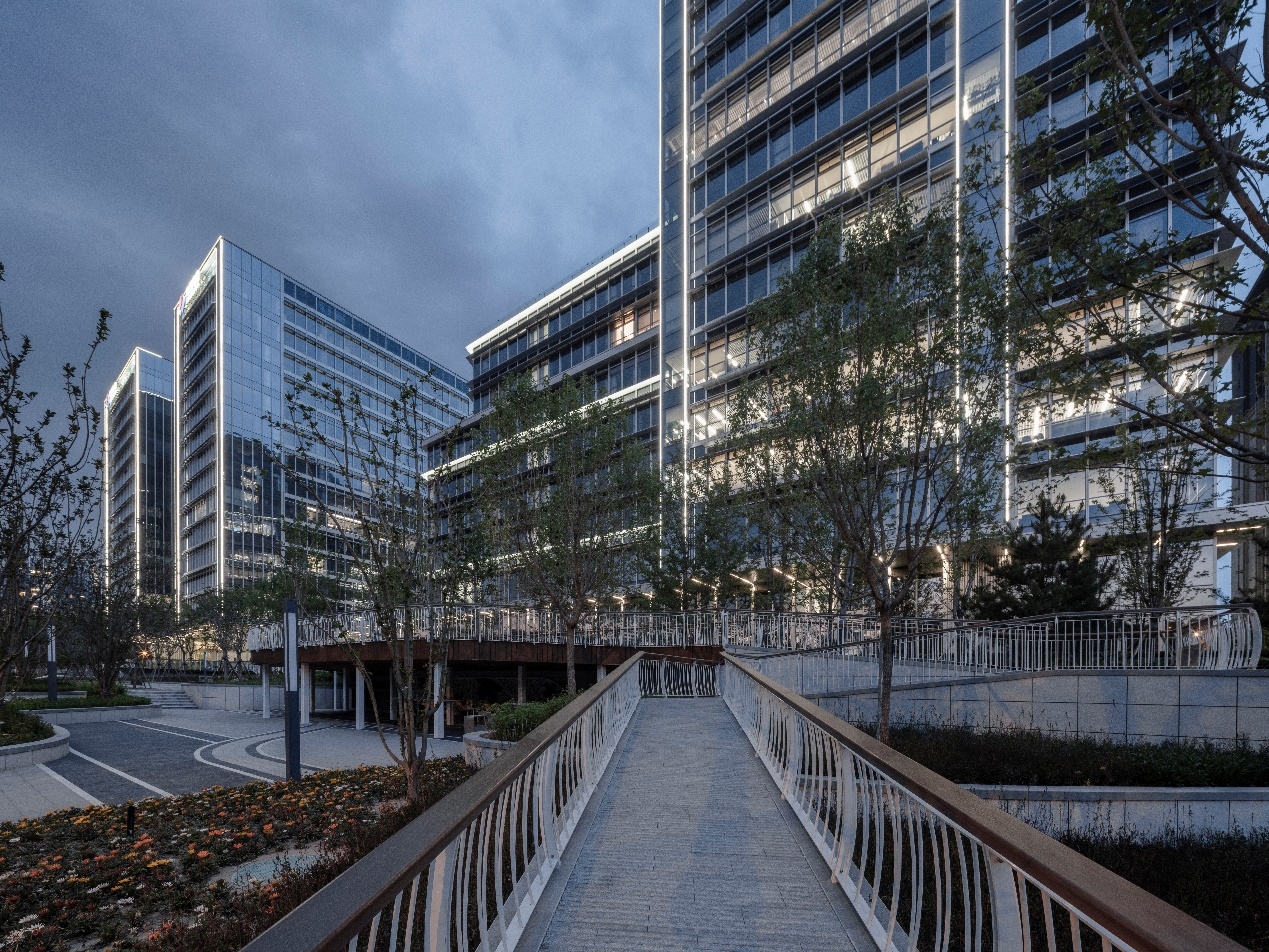
· Introverted Leisure Spaces: Through "rest anchors" such as the central square and sky gardens, pleasant social and relaxation venues are created within the compact land.
Design Challenges and Technological Innovations
Difficulty 1: Balancing Spatial Efficiency and People-Oriented Experience Under High-Density DevelopmentChallenge: How to meet the 12,940-square-meter office demand within limited land while avoiding the sense of oppression from a "concrete jungle"?
Solution:
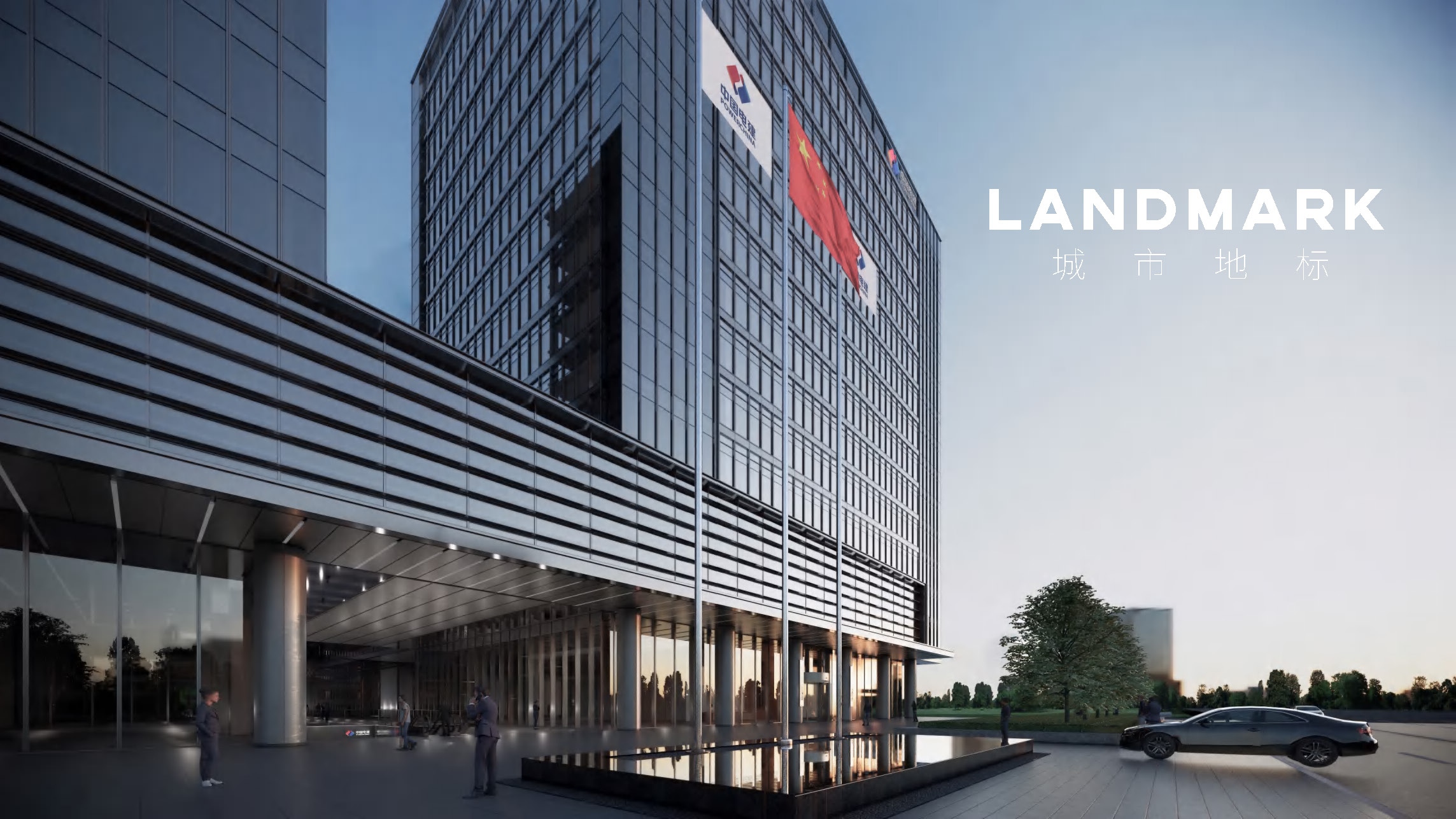
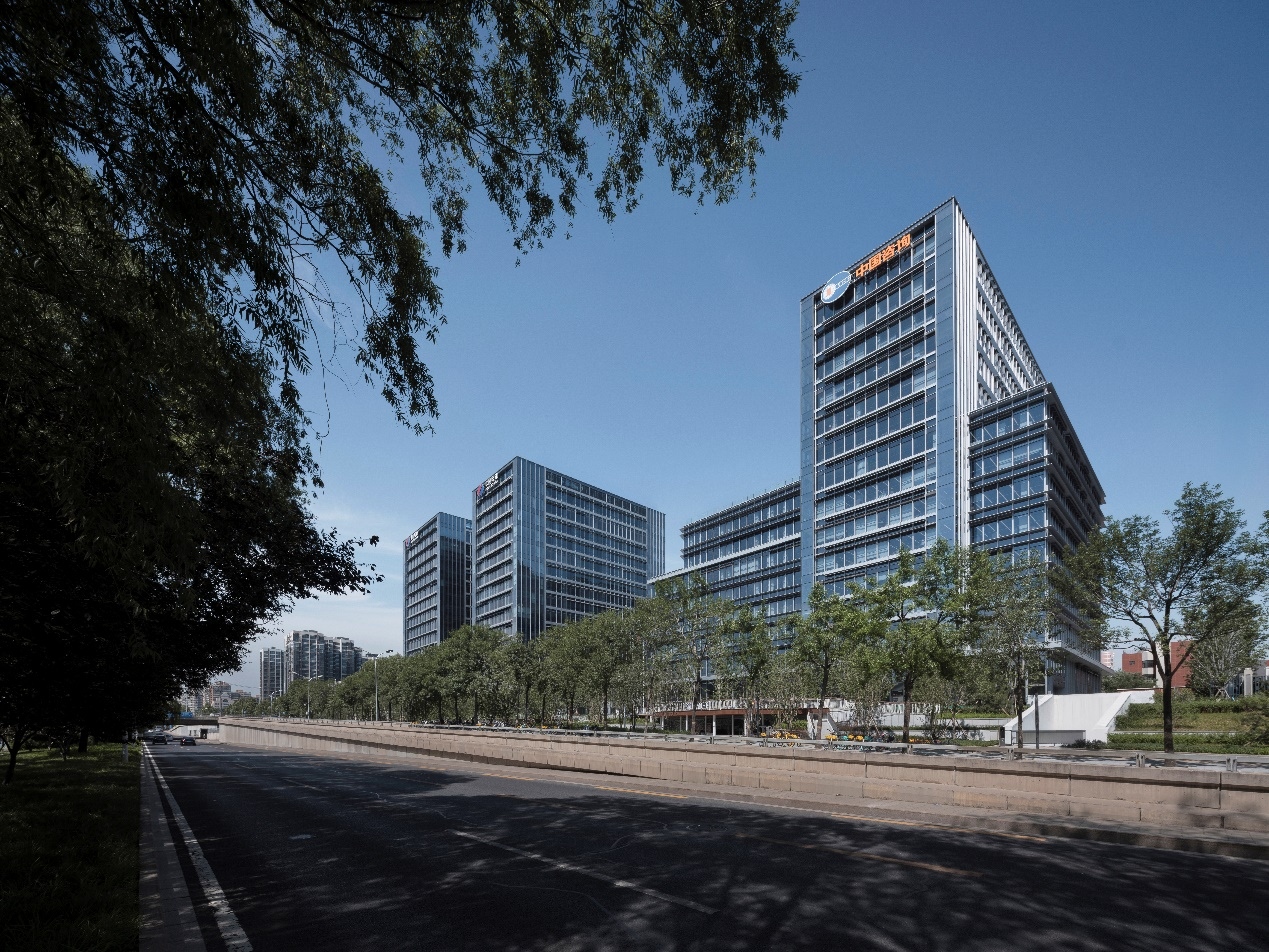
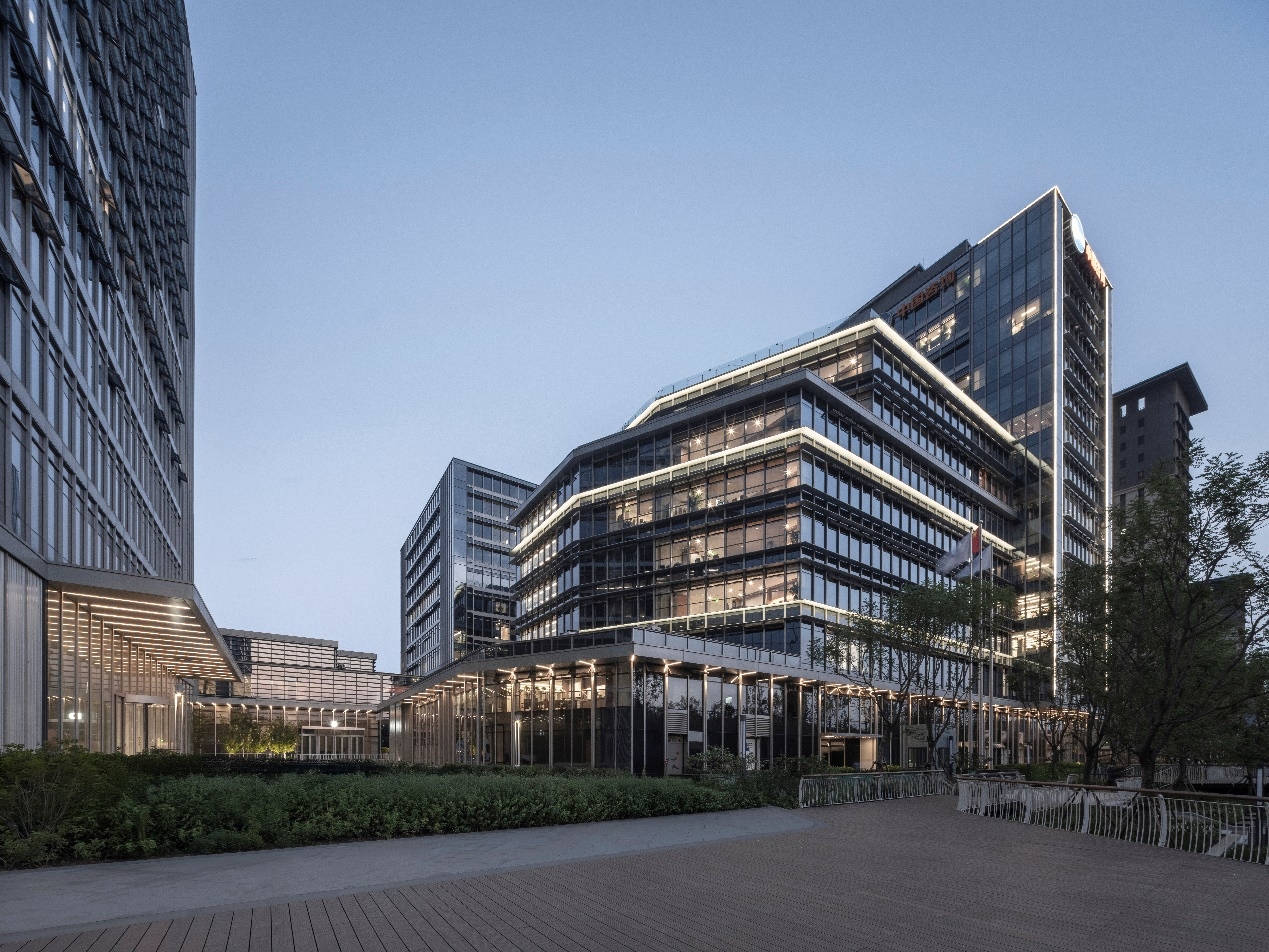
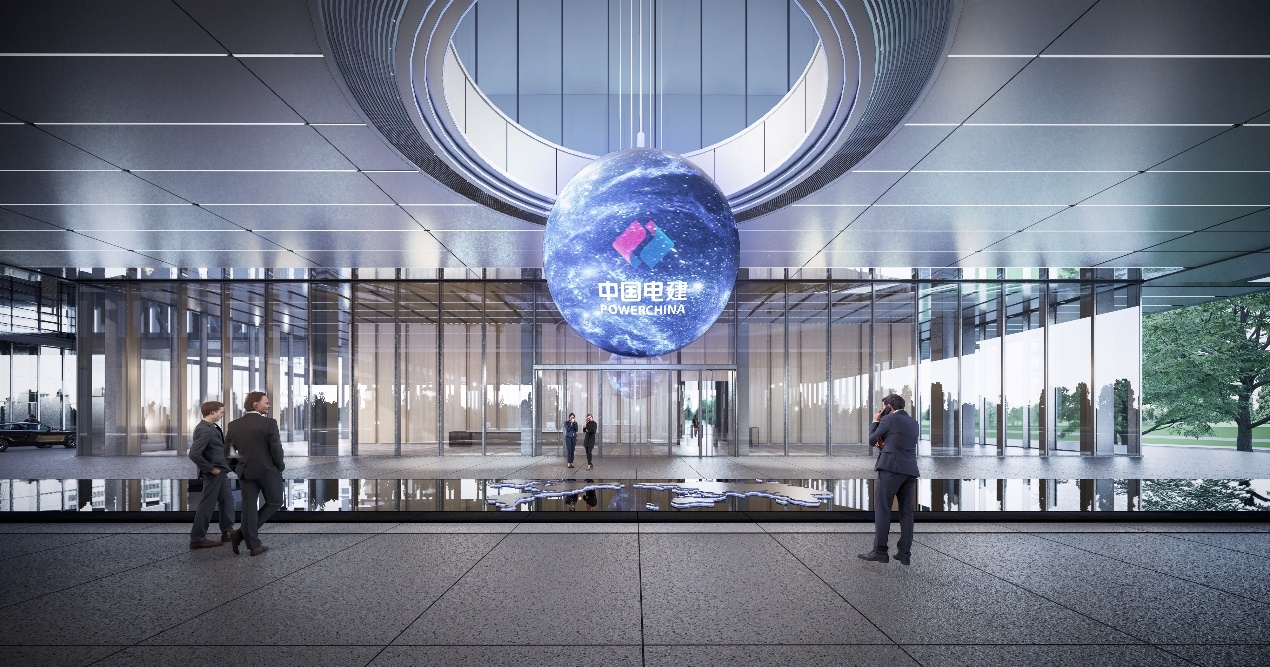
Visual Field Optimization: The west and north sides of the building complex unfold towards Linglong Road and the Kunyu River landscape belt, constructing the park's iconic urban image interface. On the north side, through horizontally extended colonnades, grandly scaled canopies, and a highly iconic glass curtain wall system, a magnificent and elegant welcoming space is created with a modern minimalist design language, perfectly interpreting the extraordinary demeanor of a world-class corporate headquarters. The west facade adopts a highly rhythmic open design; through staggered volume segmentation, it forms a visual dialogue with Linglong Park and Kunyu River, not only achieving the organic integration of architecture and natural landscapes but also redefining a new paradigm of riverside urban landscapes with contemporary architectural aesthetics.
Optimize the visual permeability of atriums and corridors to ensure users can quickly establish spatial awareness.
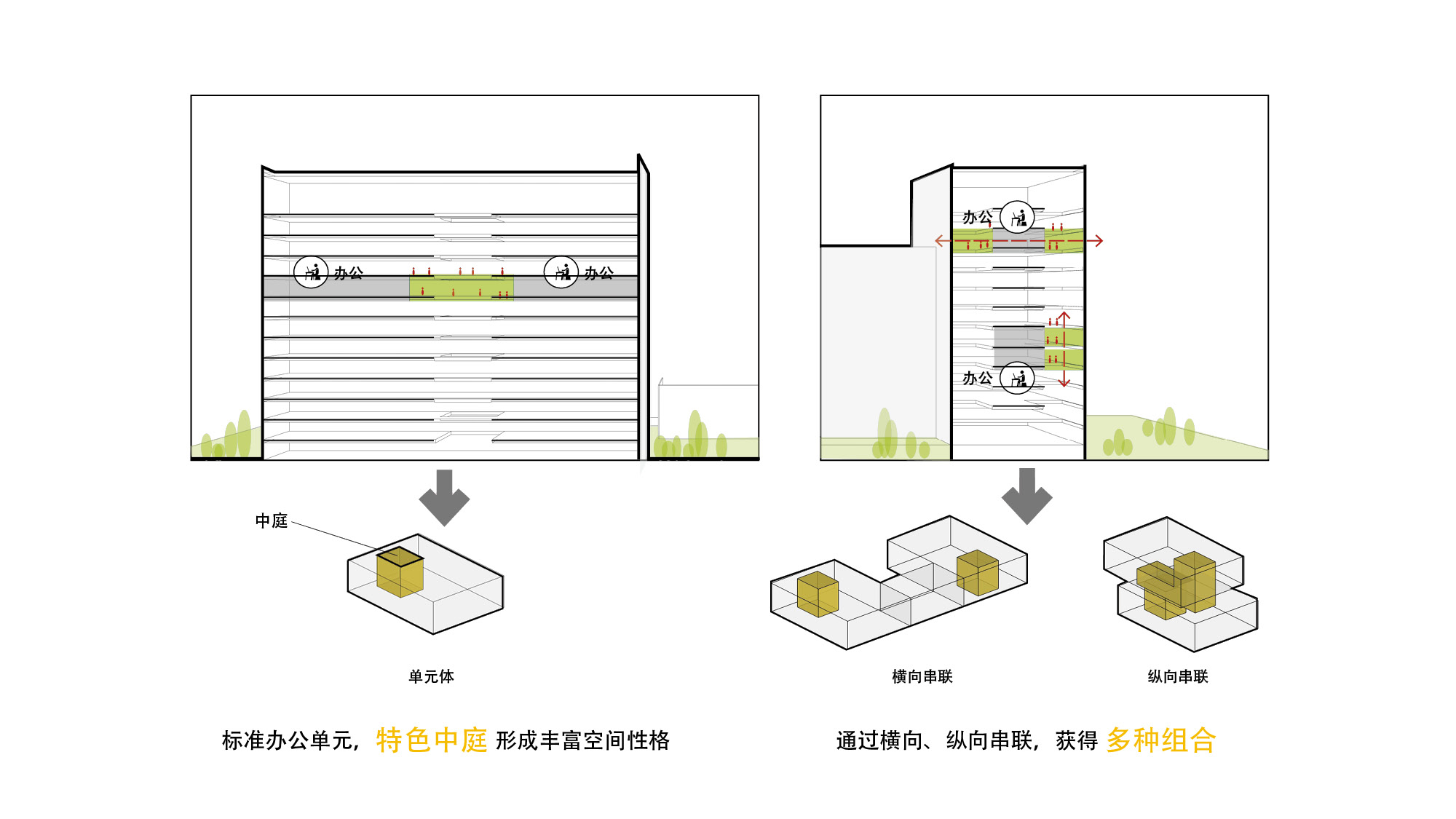
· Vertical Communalization: Breaking the stacked island model of traditional offices, shared meeting floors and rooftop gardens are inserted between standard floors to facilitate cross-departmental collaboration.
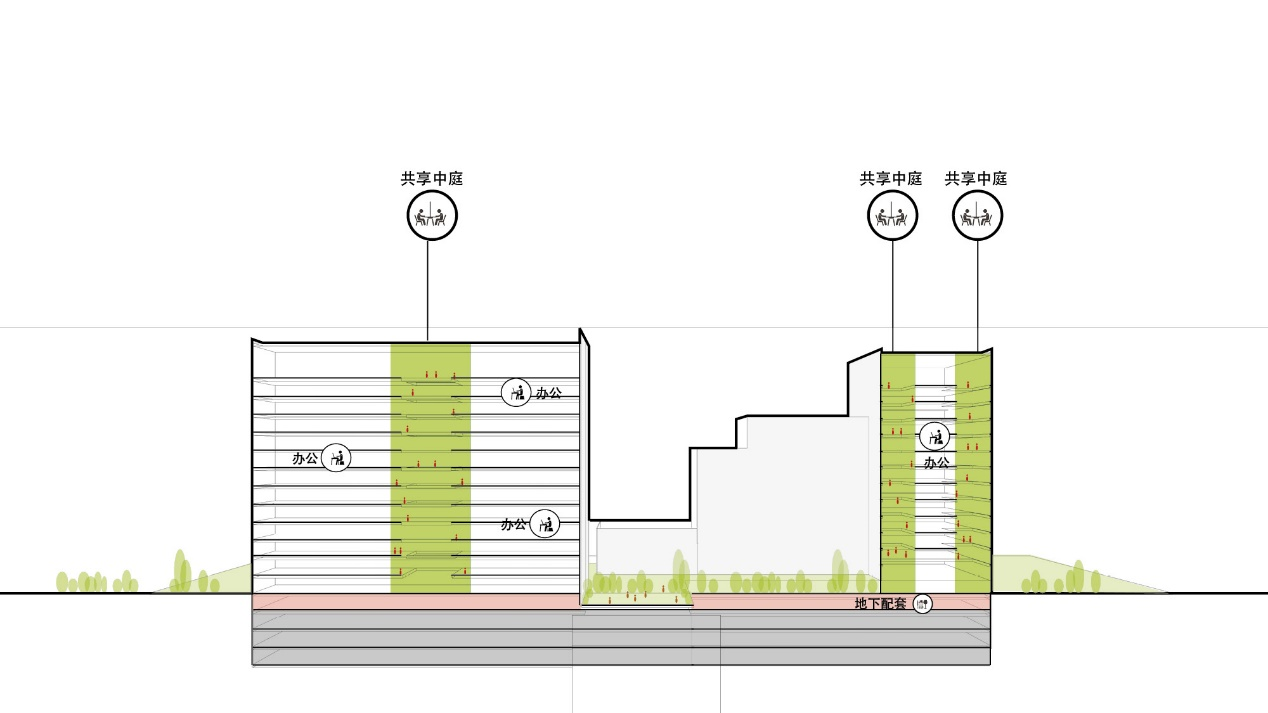
Difficulty 2: Integrating Historical Context with Contemporary Corporate Image
Challenge: How to reflect POWERCHINA's identity as a global energy enterprise while echoing the natural and historical context of Kunyu River and Linglong Park?
Solution:
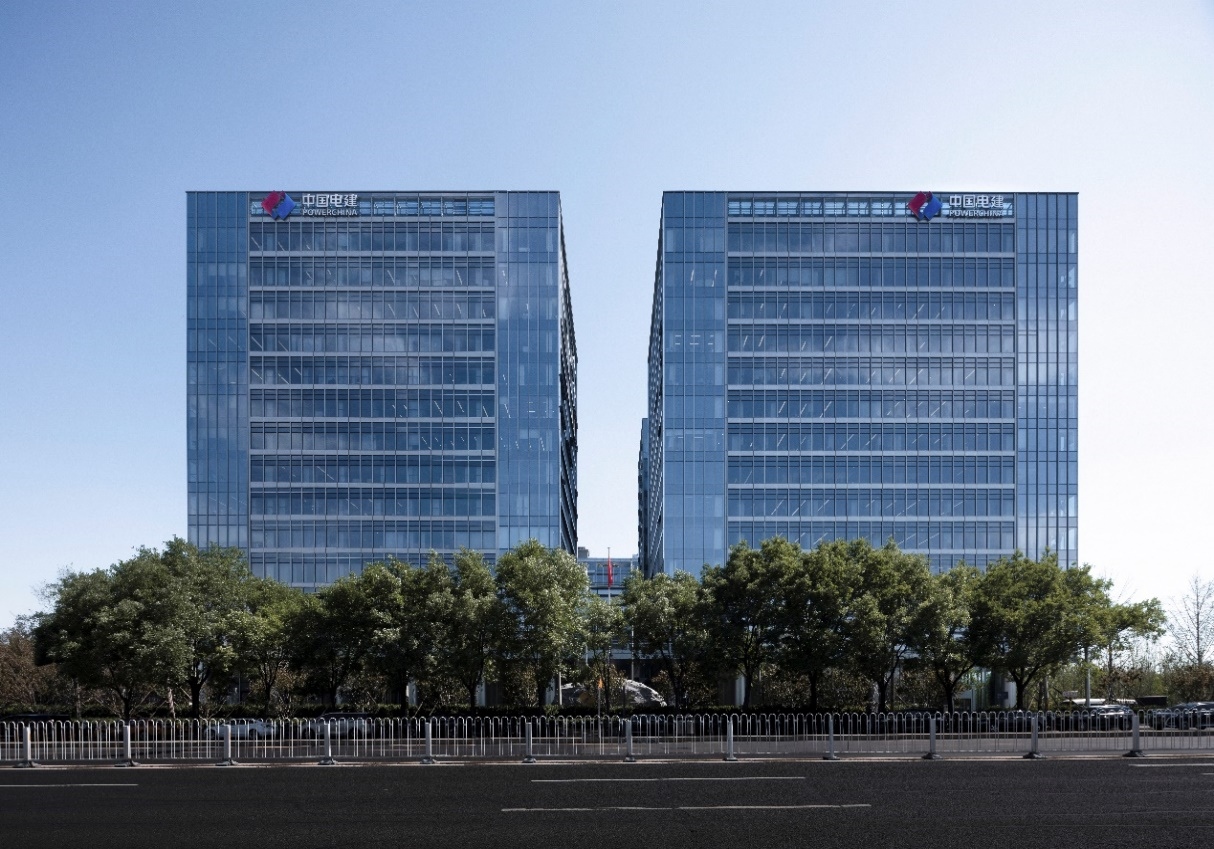
· Symbolic Translation of "POWERCHINA Gate": The design concept for the park's architectural image is "POWERCHINA Gate, Illuminating the World". The concept of "gate" embodies POWERCHINA's corporate development philosophy of innovation and openness, serving as a window to showcase the enterprise's spirit of self-improvement and courage to surpass to the world.
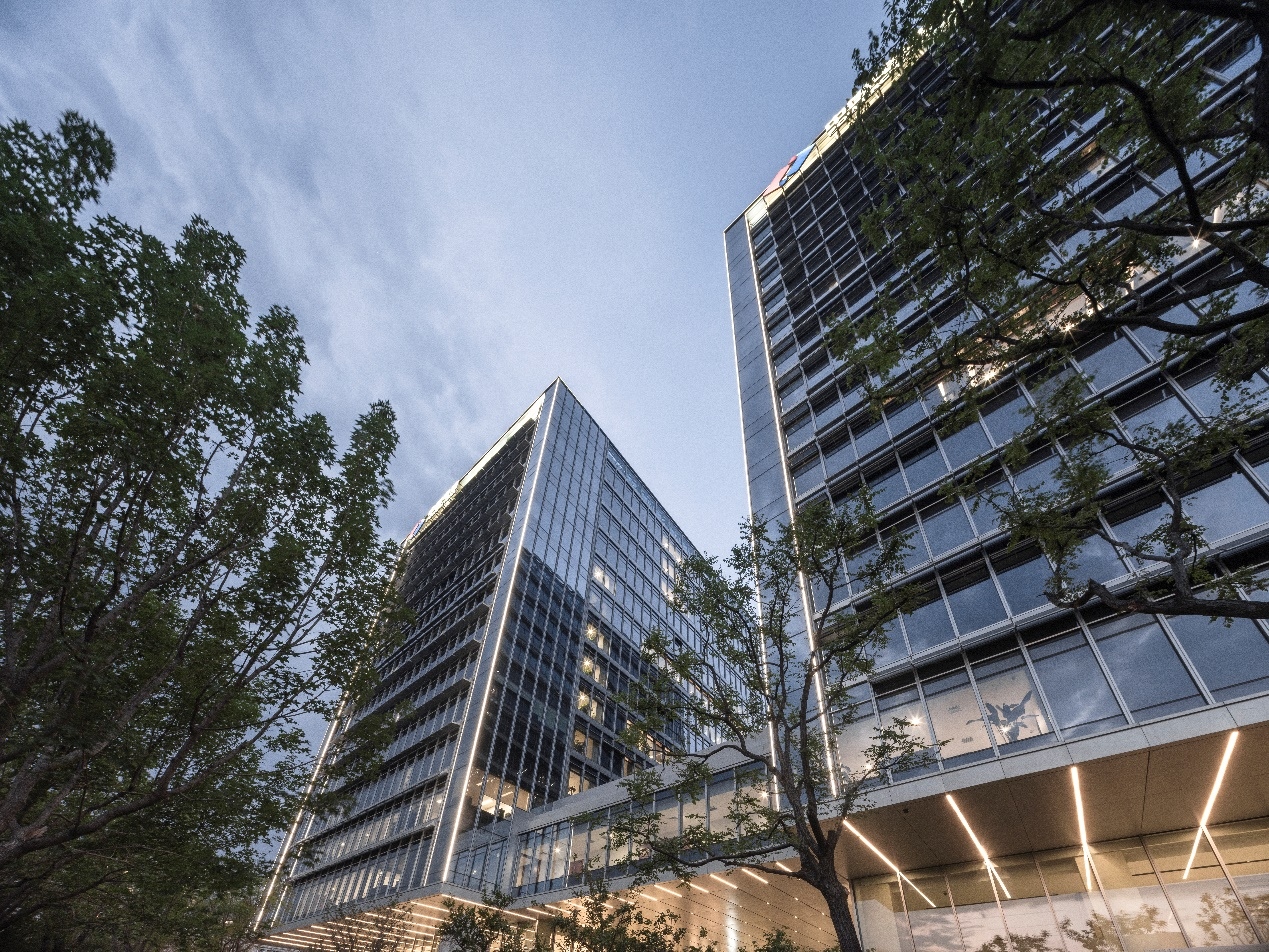
The main north entrance creates a solemn ceremonial sense through an extra-large canopy and horizontal colonnades, with the vertical lines of the curtain wall metaphorically representing "high mountains and flowing water" to materialize the corporate spirit.
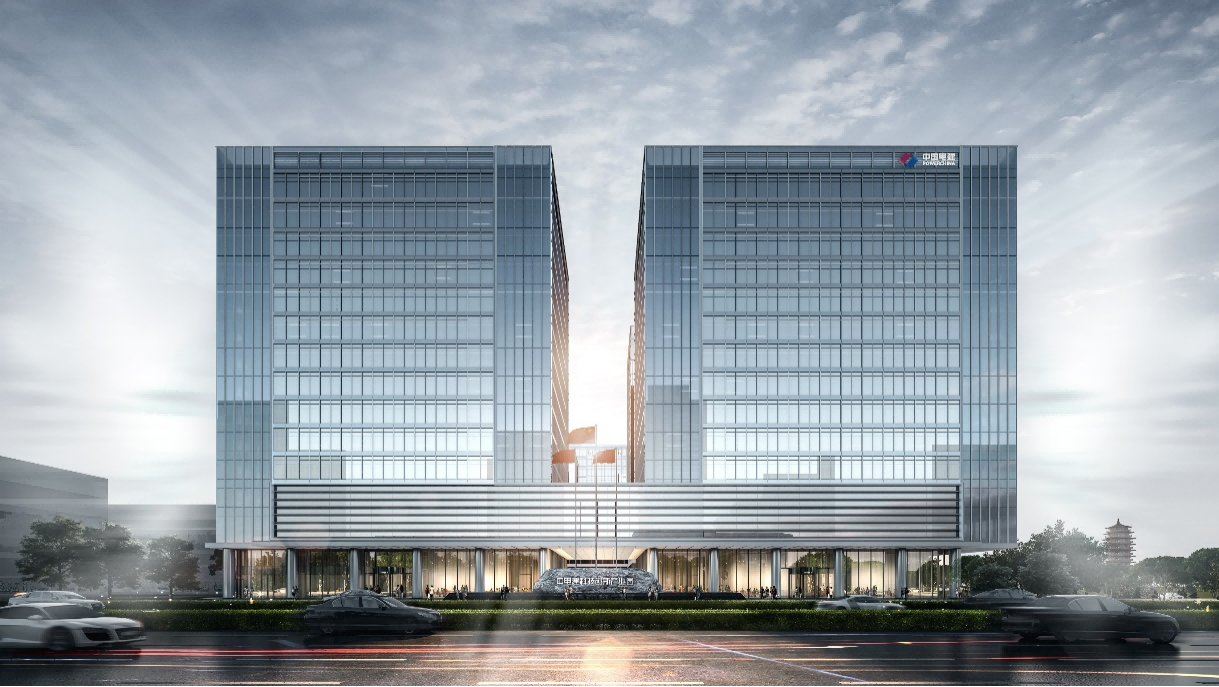
Contemporary Interpretation of Structural Aesthetics: Elegant, concise, and bold lines outline a highly powerful architectural silhouette. The elegant, solemn, and steady architectural form reflects POWERCHINA's demeanor as a world-class enterprise striving to build a globally outstanding brand.
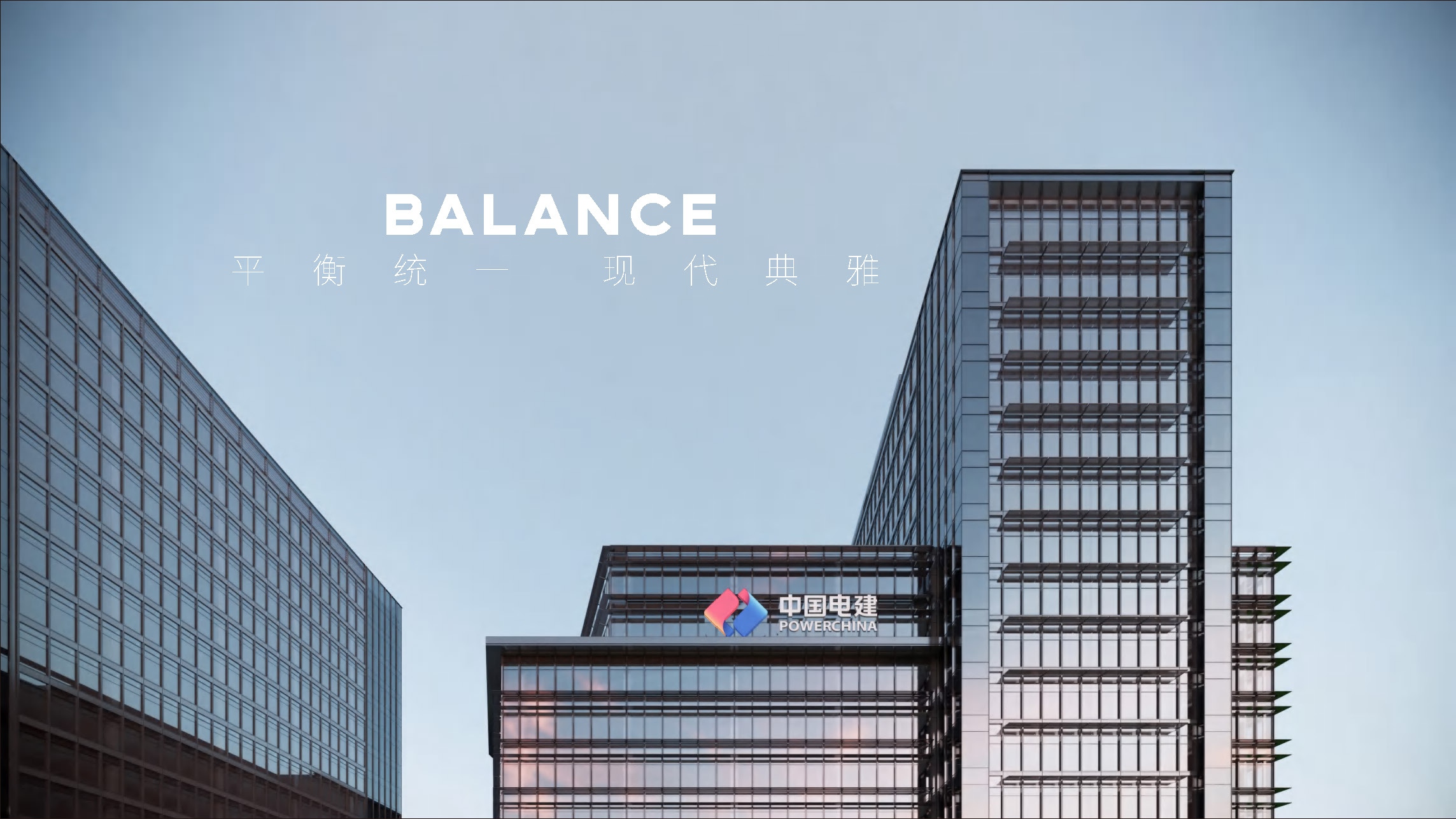
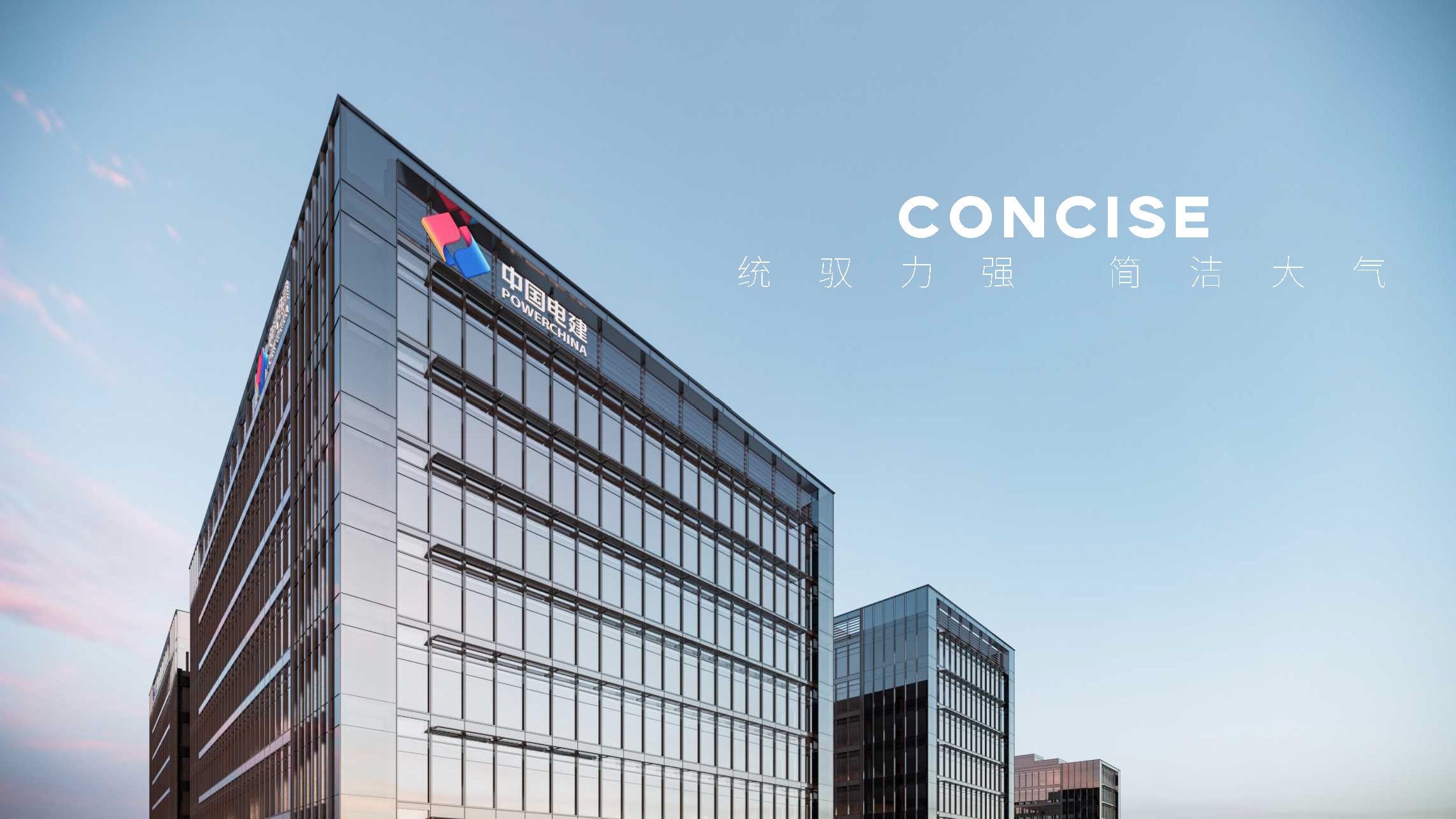
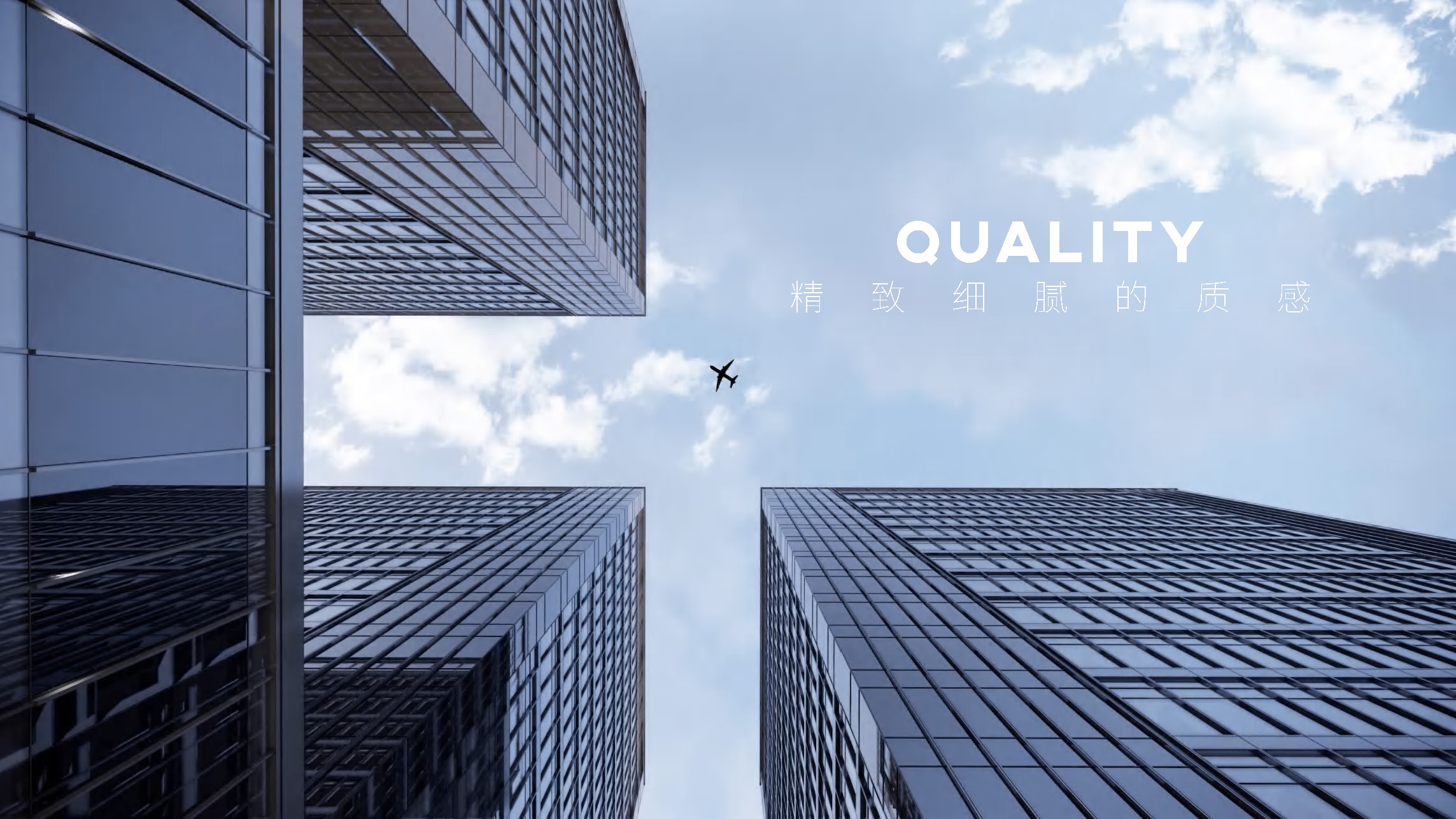
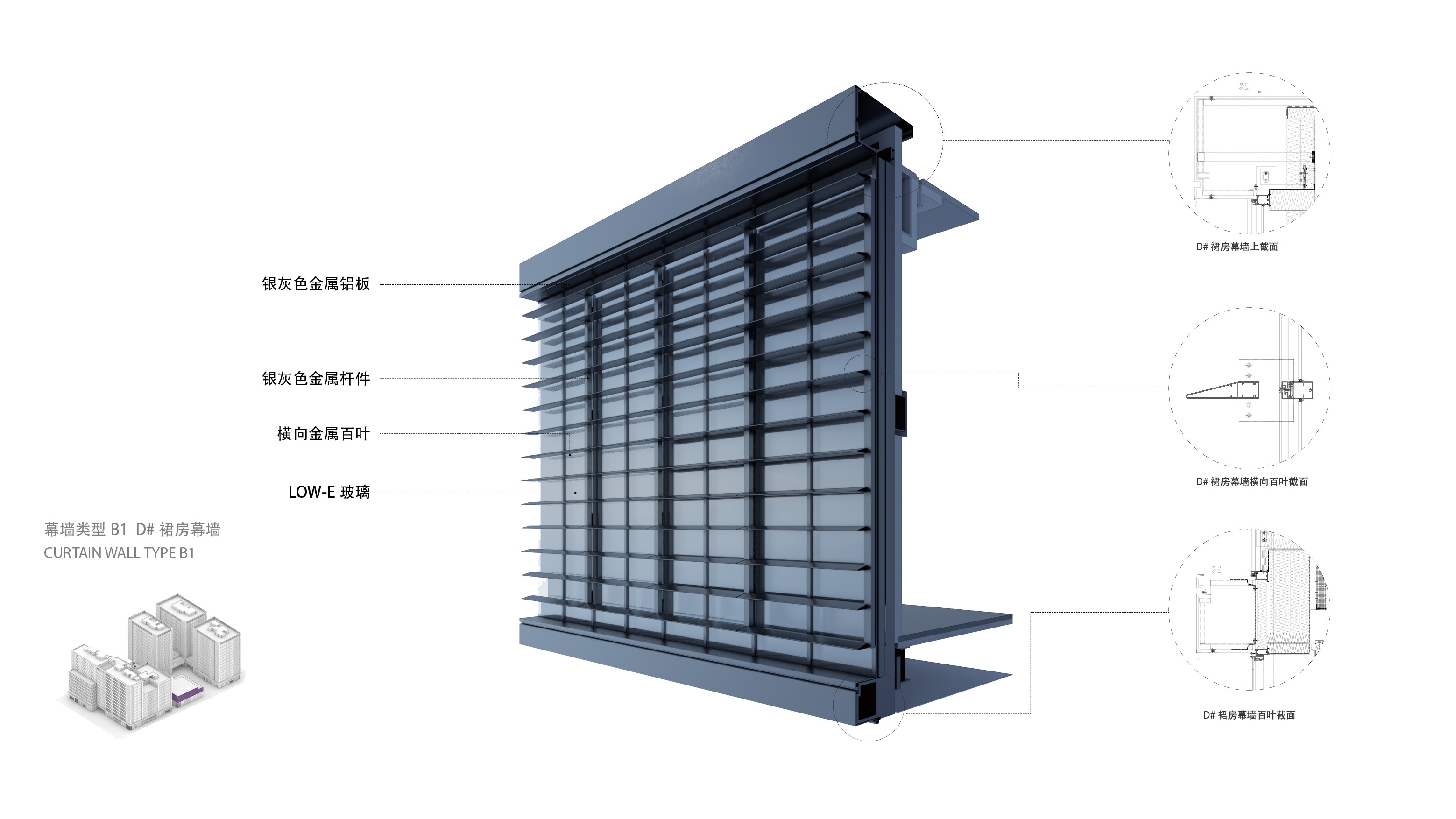
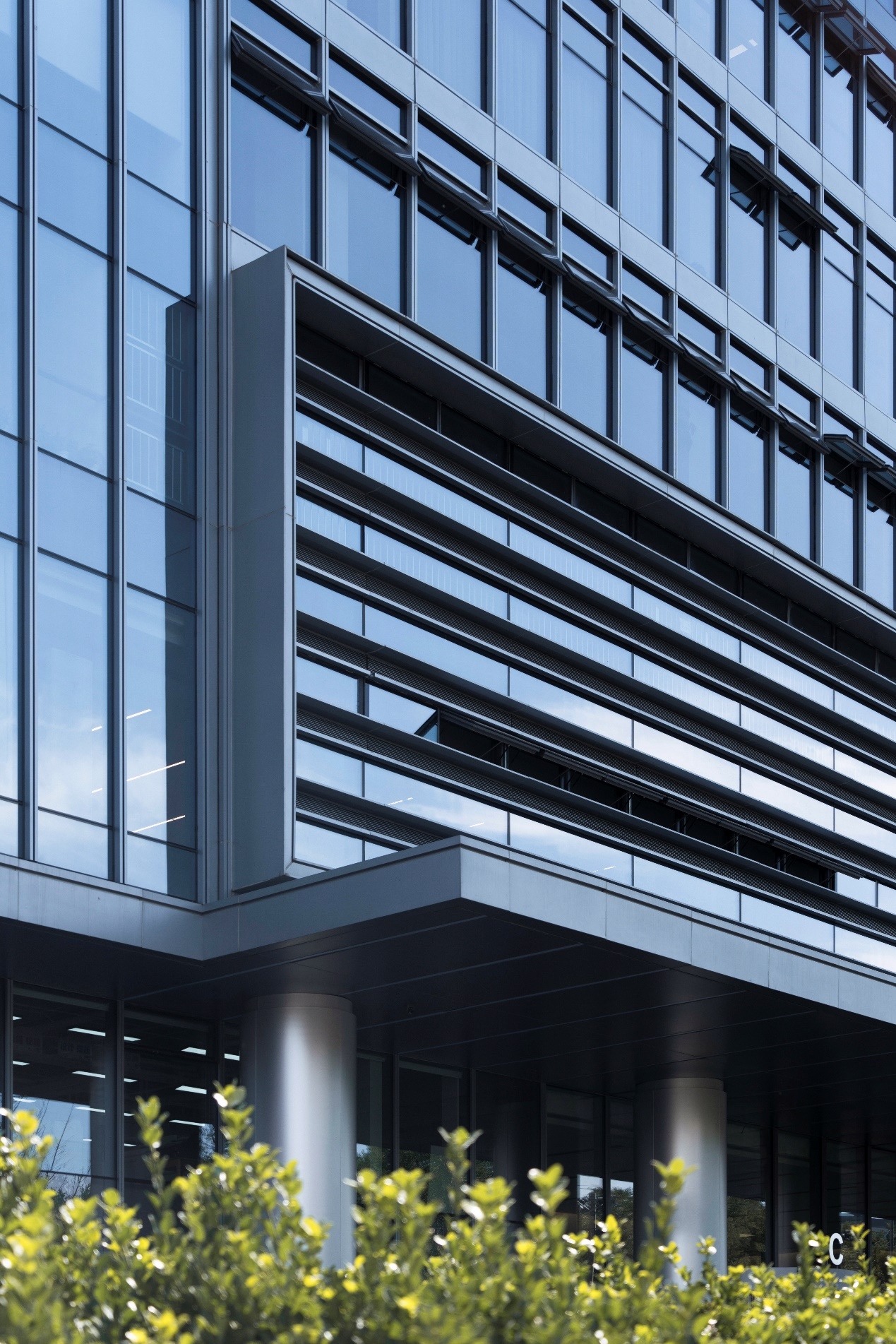
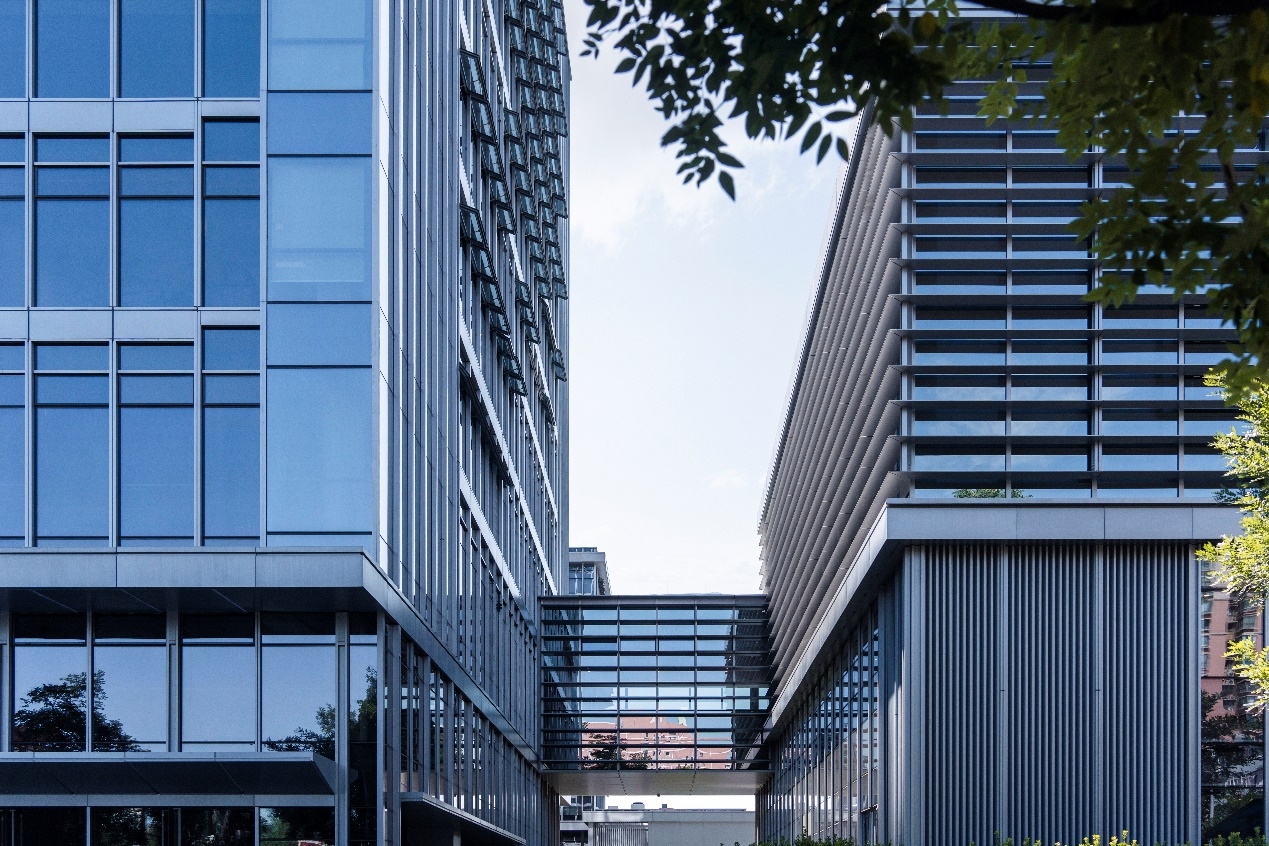
Tension Expression of Material Tectonics: The building form is emphasized through a frame structure, featuring a clear, concise, and solemn outline. The sleek vertical lines of the frame metaphorically embody "high mountains and flowing water," while the minimalist design language further strengthens the corporate headquarters image. The facade adopts silver-gray aluminum panels and Low-E glass, which not only convey a sense of technology but also integrate with the environment through reflective textures.
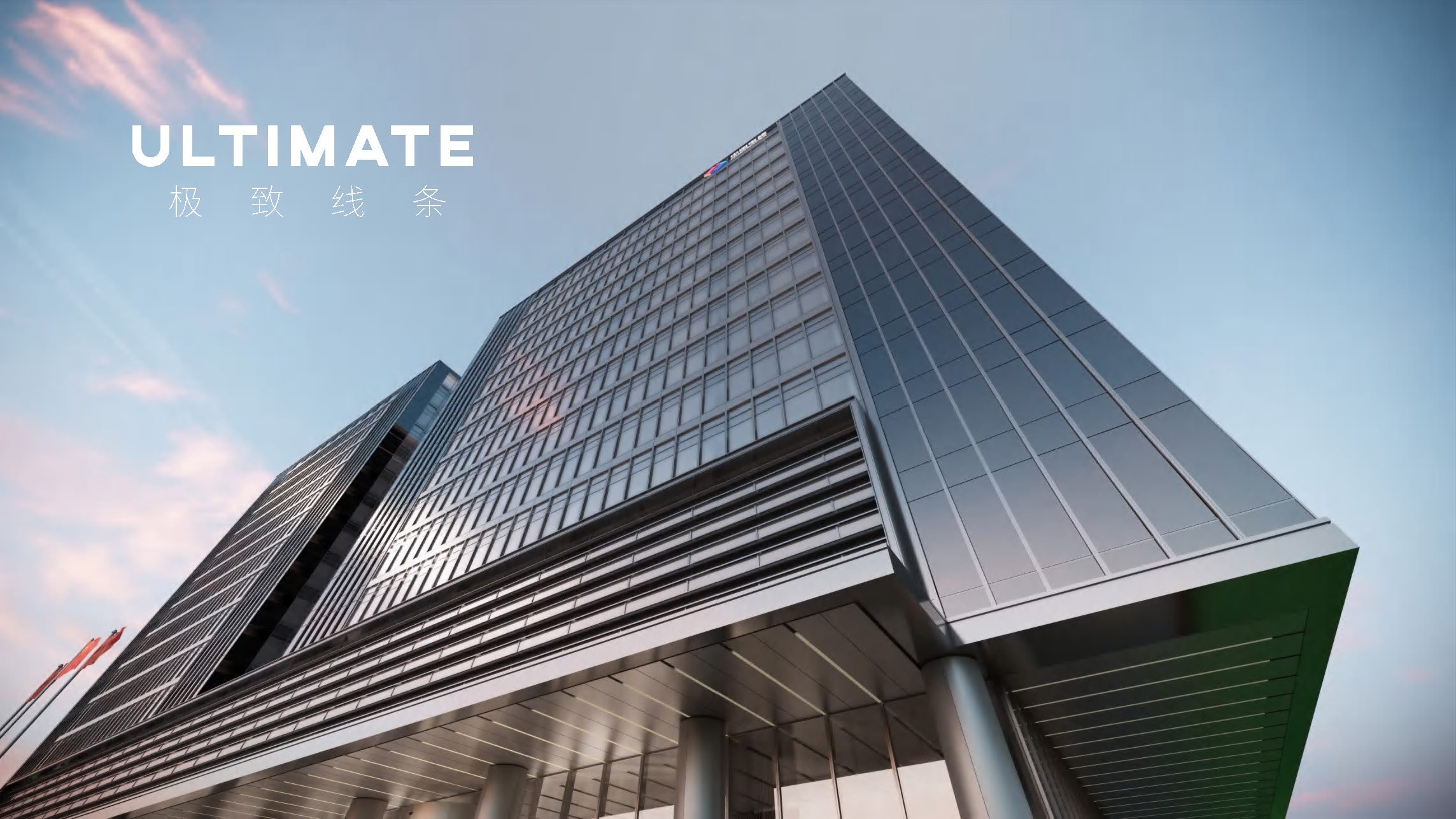
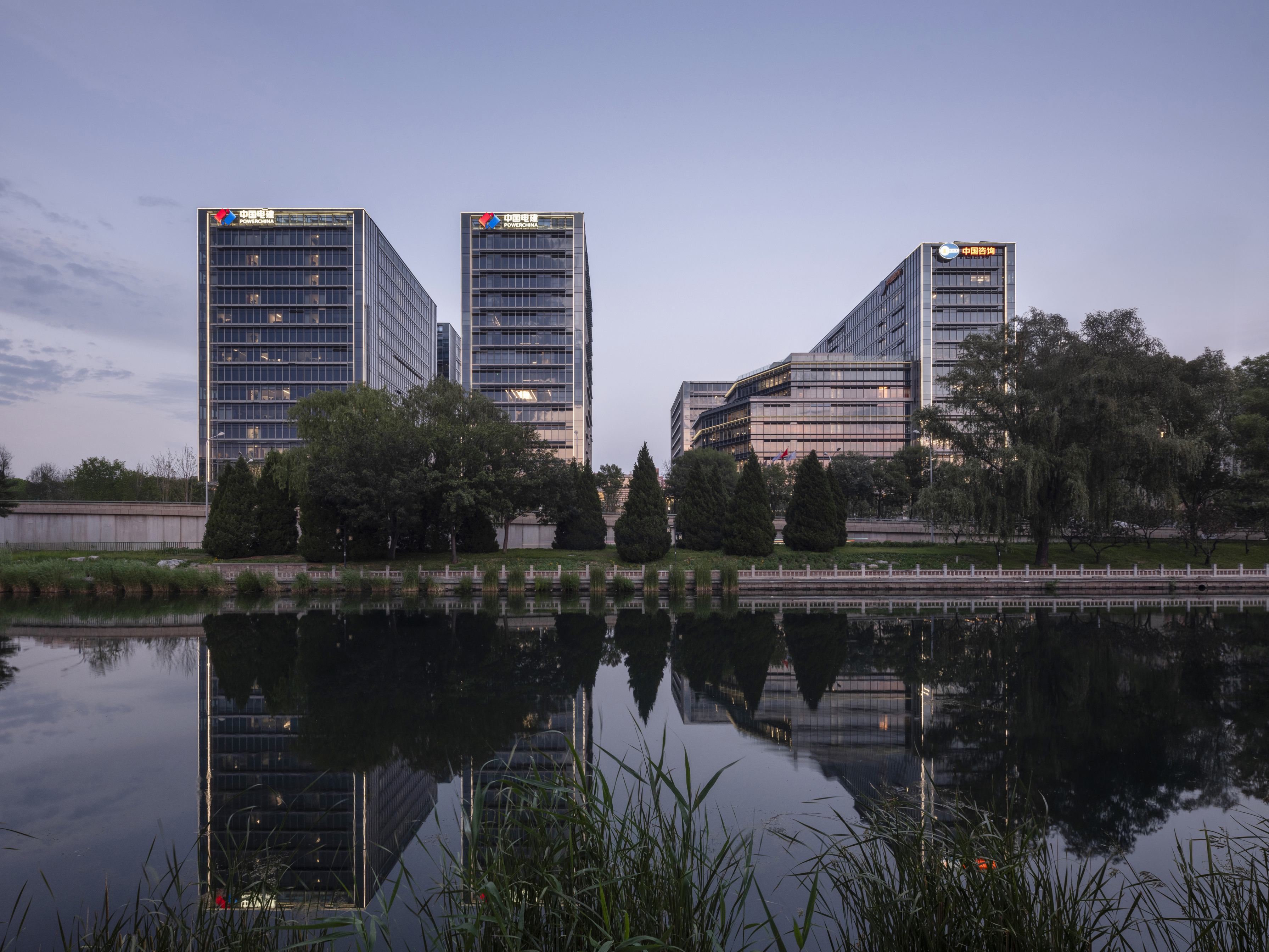
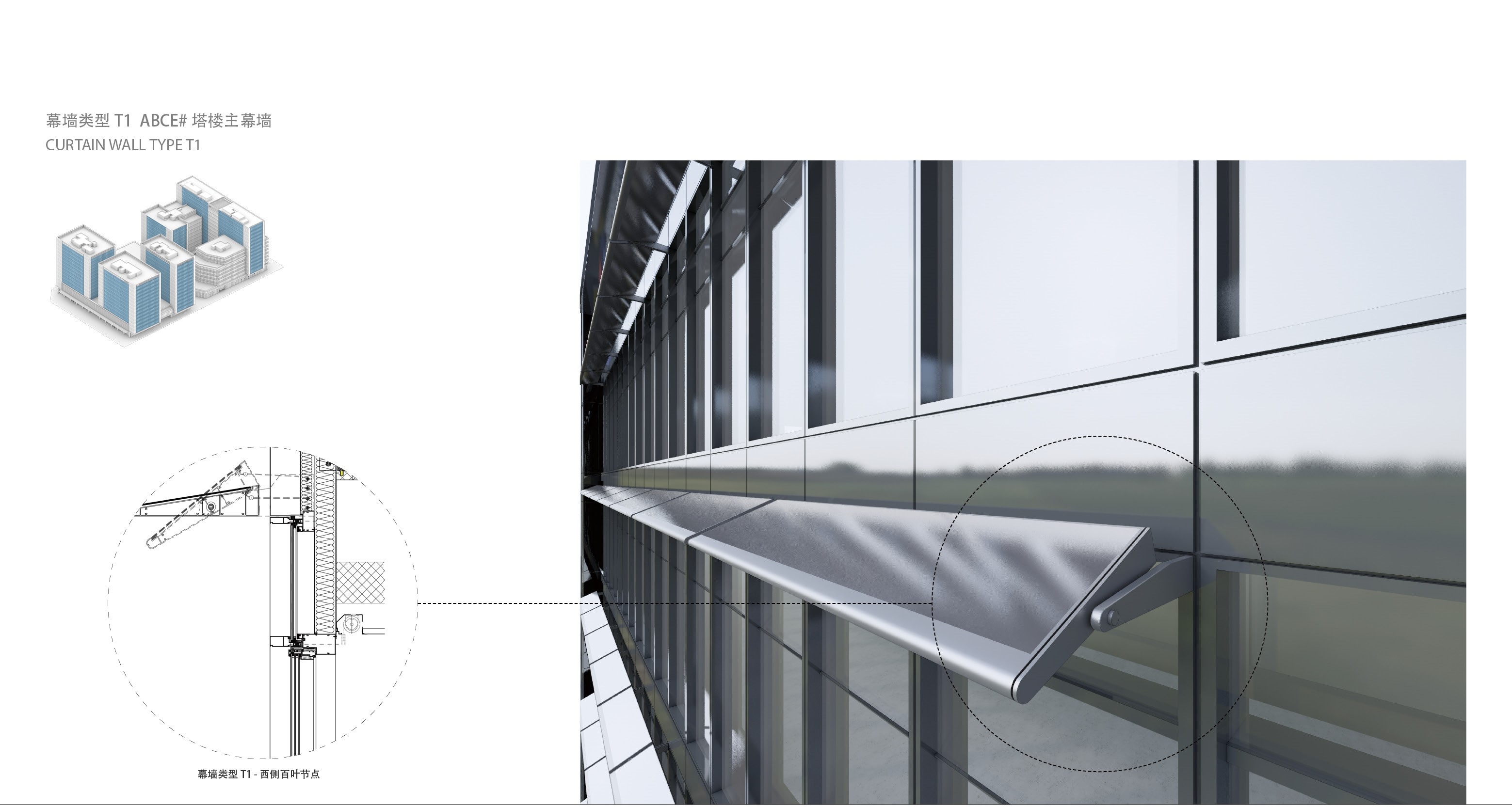
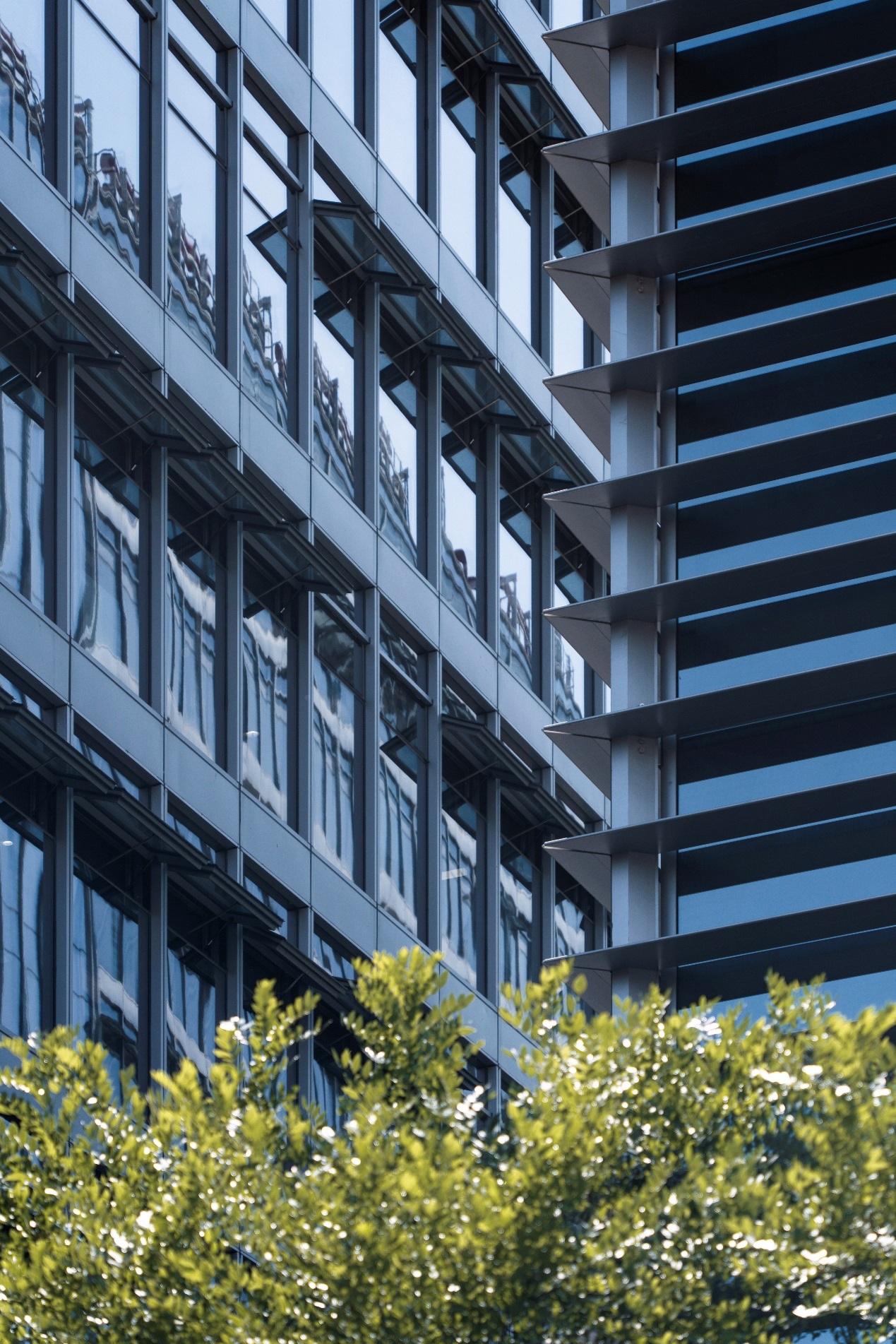
· Echoing the Urban Historical Context:The grilles on the west side reflect the sustainable green building strategy while echoing the shape of Linglong Pagoda in design. The stacked horizontal lines form an expansive riverside facade on the west. Landscapes of Linglong Park and Kunyu River penetrate into the park through the gaps between buildings, integrating the office environment with the urban landscape. The green space on the west creates a broad urban public landscape area, effectively bridging the division of public spaces caused by topographical differences and better connecting the park to the surrounding abundant historical landscape resources.
Difficulty 3: Practice of Sustainability in High-Intensity Development
Challenge: How to achieve green goals while ensuring building performance?
Solution:
High-Performance Curtain Wall System: The unitized curtain wall achieves an error control of ±1.5mm. Combined with photovoltaic glass and adjustable sunshades, it reduces air conditioning load by 30%. Sun-tracking photovoltaic louvers are installed between partial floors of the west towers to provide new energy for the building. The south facade adopts an alternating layout of glass curtain walls and metal curtain walls, minimizing the impact of full metal curtain walls on the residential buildings to the south.
3. Core Highlight: An Innovative Paradigm from Technology to Space
Highlight 1: A "Catalyst for Urban Vitality" to Drive Organic Urban Renewal
The west facade, through the three-dimensional design of setbacks and void decks, effectively activates the Kunyu River waterfront landscape belt. The building volume forms a visual dialogue with the ancient pagoda of Linglong Park in the form of staggered setbacks, which not only inherits the historical context of Linglong Pagoda but also creates a richly layered waterfront skyline. This open posture not only enhances the public affinity of the building but also organically integrates the riverside landscape with urban life through multi-level viewing platforms and transparent void spaces, ultimately creating an "urban living room" along the Kunyu River that integrates viewing, leisure, and cultural exchange."。
Highlight 2: Exquisite Craftsmanship and Attention to Details, Emphasizing a Sense of Refinement and Technology
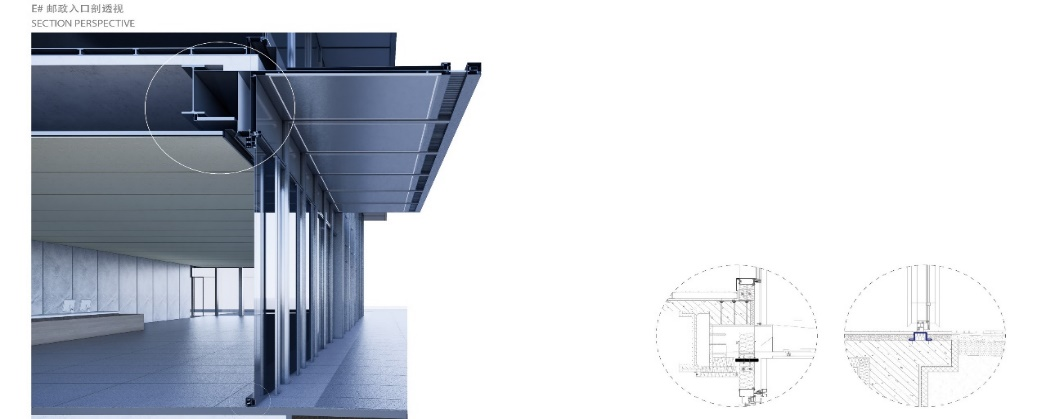
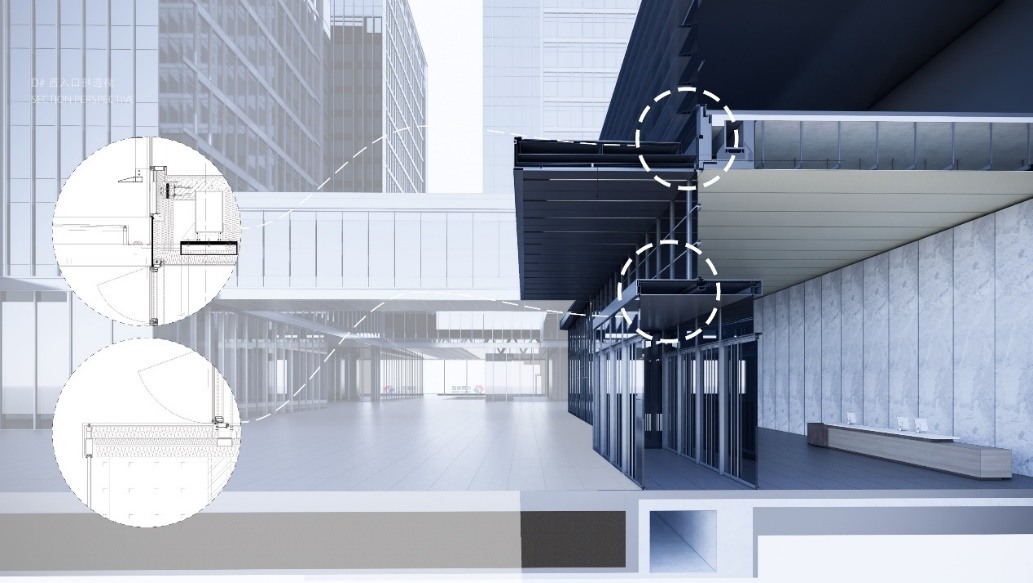
· The facades of the first and second floors of the building have been refined through meticulous design iterations to form the final scheme. Meanwhile, integrated with landscape and interior design, they create dynamic spaces that blend a sense of technology with warmth.
Highlight 3: Contemporary Interpretation of Cultural Symbols
· The top of the main tower features a "gate-shaped" hollow structure symbolizing the "POWERCHINA Gate". At night, LED media facades display energy flow animations to reinforce the brand identity.
Conclusion
POWERCHINA Science and Technology Innovation Industrial Park responds to the diverse needs of the city, enterprises, and people through "spatial translation". Its value lies not only in its physical form but also in providing a trinity innovative paradigm of "technology-culture-ecology" for contemporary corporate headquarters design.
Client POWERCHINA
Site Area :28,300㎡
Building Area :209,200㎡
Completion :2024
HZS Services :Architecture
Awards
2023London Design Awards | Silver Award
2023MUSE Design Awards | Silver Award
Articles
A Work by HZS Design | POWERCHINA Science and Technology Innovation Industrial Park